The LorinersMulti Academy Trust
A History of the Leather Industry in Walsall
 Origins
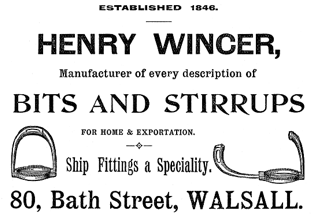
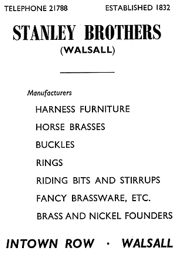
The origins of Walsall's leather industry start in the Middle Ages. Although there are only a few references to leatherworkers, there are many to loriners, or saddlers' ironmongers. Loriners made metal items of horse furniture: stirrups, bits, buckles, spurs and harness mounts. They also manufactured saddle trees. Loriners needed high grade iron, coal, charcoal and limestone to make their goods. Walsall, and the area around it, could provide all these.
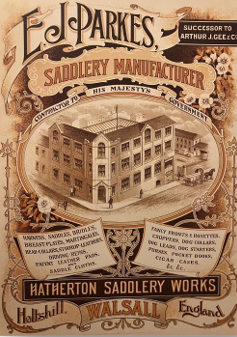
 The lorinery trade continued to grow in the 17th and 18th centuries. Many of the town's leather goods trade pioneers were bridlecutters. By settling in Walsall they could call upon the skills of local loriners for their bits and buckles. In the early 19th century leatherworking became an important local trade. After 1840, the development of the town's leatherworking industry gained pace. The arrival of the South Staffordshire Railway to Walsall in 1847 gave a boost to the trade. By 1851 there were 75 firms making bridles, saddles and harness.
Walsall: The horse's emporium
Horses were an essential part of Victorian life. There were around 3.3 million horses in late Victorian Britain. They provided a huge market for Walsall's manufacturers. In the last decades of the 19th century, the Walsall leather trades entered a golden age of prosperity. Exports boomed and Walsall firms sent their products all over the British Empire. Foreign wars were a particularly lucrative source of trade.
Working conditions
The Walsall leather industry in the late Victorian period was a mass of tiny, primitive backyard workshops. There were handful of factories, each employing two or three hundred people. The Sweated Trades Commission of 1889 reported allegations of 'sweating' in Walsall. It showed that skilled workers worked long hours with low wages. Working conditions, especially for women, were bad. Typical earnings for a male saddler at this date would be about 28 shillings (£1.40) for a 55-hour week. Women would earn a half or a third of this. Men were paid by the hour, but most women were paid by the complete item. When orders were scarce women would be laid off without wages. The Commissioners were shocked to hear how employers deducted wages for heating, lighting and the space in which employees worked.
 The rise of light leather goods
At the turn of the 20th century Walsall was home to nearly a third of Britain's saddlers and harness makers. Walsall remains best known for making saddlery and harness, yet from 1900 these trades began a long decline. One by one, the traditional roles of the horse were challenged and replaced by the internal combustion engine. The great age of the horse had ended. Walsall firms had to adapt to this changing world or disappear. Some had been making light leather goods such as travelling bags, hat boxes and wallets since the 1870s. From 1900 onwards they concentrated more on this type of work. Less profitable lines, such as harness and saddlery, were gradually dropped from their catalogues.
Recent history
Since the 1960s, the light leather goods trade has met with tough competition from overseas producers. There are many based in developing countries with much lower overheads. Walsall's surviving leather goods firms have concentrated on the luxury end of the market. Some of the goods for the world's most famous brand names are made in Walsall. Growing numbers of people started to take up riding for pleasure. As a result, the saddlery and bridle trade revived. By the start of the 21st century, Walsall had around ninety leather companies. They created an astonishing variety of items and exported them all over the world.